

About us
President's Message
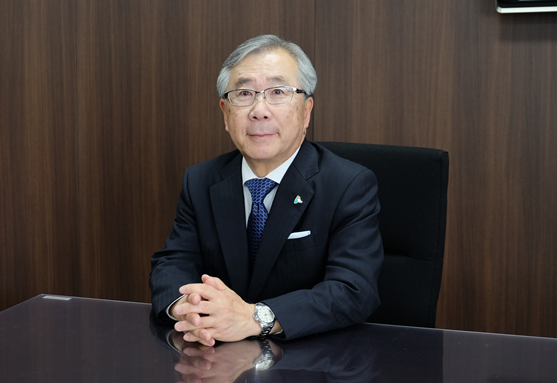 The environment surrounding universities is currently undergoing a major transformation. Challenges facing healthcare and medical education are becoming increasingly complex, including the continuing decline in the birth rate and aging population, regional shortages of physicians and the uneven distribution of medical specialties, the promotion of digital transformation in healthcare, and adaptation to cutting-edge technologies such as generative AI. As a university supporting regional healthcare, our role is becoming ever more significant, particularly in light of the emergence of new infectious diseases and preparations for the Nankai Trough earthquake.
Against this backdrop, Hamamatsu University School of Medicine, guided by its Foundation Vision of "training outstanding medical professionals, disseminating original research findings to the world, and serving as a core institution in regional healthcare," will further enhance our education, research, clinical practice and community engagement, and continue to address pressing societal challenges.
The mission of healthcare professionals extends beyond simply providing the best possible care to the patients before them. It also includes the vital responsibility of pioneering new forms of healthcare and paving the way for the future of medicine. The University will further strengthen collaboration among industry, government and academia, and will advance the development of human resources capable of contributing to healthcare for patients worldwide, as well as the enhancement of research and medical systems.
In education, we aim to train healthcare professionals who can practice the best possible medicine while respecting each patient's wishes, by understanding the values, backgrounds and diversity of each individual patient and collaborating with other professions, based on the fundamental principle of nurturing doctors and nurses who are truly needed by society. Last year, our university received a high ranking, placing second in Japan in the "Teaching Resources" category of the Times Higher Education Japan University Rankings. We will continue to further enhance our educational environment while promoting overseas clinical placements and international exchange, thereby nurturing healthcare professionals with rich humanity and an international outlook.
In the field of research, we were among the first national universities to engage in early exploratory clinical trials, and have accumulated a wealth of achievements and experience. Building on this foundation and leveraging our strengths in photomedicine and imaging technology, we will further strengthen our framework for rapidly translating the outcomes of basic research into clinical practice. Centered on the Health Informatics Center established in the 2025 academic year, we will make effective use of medical data, including real-world data, to promote the creation of medical innovations originating from Hamamatsu. Furthermore, with the Research Promotion and Administration Center, established this academic year, at its core, we will strengthen support for the formulation and implementation of research strategies. We will work to create an environment where early-career researchers can devote themselves to creative and challenging research, thereby enhancing the University's research capabilities.
In the area of medical care, we regard digital transformation (DX) as a key pillar of our university hospital. Through participation in the Ministry of Health, Labour and Welfare's pilot project for electronic medical record information sharing services, we will establish an efficient, high-quality healthcare delivery system, strengthen collaboration with regional medical institutions, and promote the equitable access to healthcare. With the Regional Medical Education and System Development Center, established in the 2025 academic year, serving as a core hub, we will foster physicians with comprehensive clinical competencies. We will also collaborate with local governments and regional medical cooperation promotion organizations to address challenges in Shizuoka Prefecture, such as areas with a shortage of physicians and the uneven distribution of medical specialties.
Regarding regional collaboration, we are strengthening our educational and research functions based on the inter-departmental agreements concluded in the 2025 academic year between our Faculty of Medicine and Shizuoka University's Faculty of Informatics and Faculty of Engineering, and between our Institute of Photonics Medicine and Shizuoka University's Research Institute of Electronics. Building on this collaboration, we have also concluded agreements with Shizuoka City and Hamamatsu City, through which we will contribute to solving regional challenges and the development of local communities. In addition, through the disaster prevention specialist training course, which was launched in the 2025 academic year for first-year medical students, we are cultivating healthcare professionals capable of responding immediately in the event of a disaster, contributing to stronger disaster preparedness and resilience in local communities.
Last academic year, we established a new Diversity Promotion Office under the Vice-President for Diversity & Social Contribution. In collaboration with the Total support center for Doctors, we will continue to foster an environment in which all staff members can perform to the best of their ability, while respecting diversity and upholding the principles of fairness and inclusion.
Hamamatsu University School of Medicine aspires to be an institution that translates its long-standing initiatives into tangible results, continuing to contribute to both the local community and the wider world. With all faculty and staff working together as one, we are committed to building a university that supports the future of healthcare and society. We sincerely appreciate your continued understanding and support.